Oh, I see… he downscaled the video using avisynth. Downscaling algorithms aren’t critical like upscaling, you should be able to downscale just as well using any competent video application. I read in one of your previous posts that you upscaled 400% with Artemis AAA, then downscaled to 1080p in Resolve and then applied Artemis AHQ at the reduced resolution… this, in my opinion, is a good approach.
Hybrid makes it easy.
What are the Avisynth filters you used in Starxrip for processing and cleaning up, i.e: compression artifacts, banding, etc… the video before upscaling? Thanks.
If the quality of the current models are on the decline, what are the best versions of models like Artemis HQ/LQ/MQ, and Gaia CG/HQ? Do I have to downgrade my VEAI version, or is it possible to import them into something like v2.2? Thanks a lot. I currently have 1.6.1; 2; 2.1; 2.2.
Large and very noticeable patches frequently pop up when using Gaia models. Anyone know what might cause this?
for normal quality source enlargements or clean up I use mostly AMQ9 or AMQ13. I dont use much Gaia anymore.
you can add older models by editing json files in the current model folder
artemis-mq-13.json
edit as text file and change version from 13 to 9 for example, save as artemis-mq-9.json
restart your VEAI
Do you mind sending me over the AMQ9 json file? I think I deleted it along with older VEAI versions.
1 Like
Check your NVIDIA drivers. Another person fixed it by updating to the latest Studio driver.
moving with keyboard shortcuts in Windows OS.
Alt+space+M
then with arrows
resize any window
alt+space+s
click one arrow to choose which side do you want to resize and afterwards with arrows you can resize (left/right or top/bottom) that side.
finish with enter key to confirm your window size and position
Doesnt fix your issue but as a workaround for now could work
1 Like
I personally use “Add > Restoration > ColorDeband > f3kdb_neo” (high (default) or very high depending on the source) for debanding purposes then clean the grain generated by it using artemis high/medium v9.
Edit: Here are the artemis v9 and v10 models that you asked for: Artemis - Forced*
*Forced veai to use the (sometimes) higher quality fp32 models on fp16 capable gpu’s. (Barely any speed reduction on Amper gpu’s or similar.)
Edit: You lose twice the speed using the fp32 gaia models with barely any improvement at all, so the link for those was therefore removed.
Question: I was lead to believe there is no visible quality difference between using fp16 and fp32 models. Is there a difference? Also fp32 would not be nearly as fast as fp16 on newer Nvidia RTX cards, true?
Nobody knows for sure how Topaz handles things as far as their inner workings go, but the way I understand it is that the neural network needs to be fully written using FP16 in order to be stand equal to FP32 - FP16 have lower accuracy by design because it has much less bits to represent the same number and will subsequently result in a lot of overflow and underflow issues, (sometimes even if done property) but I could be wrong…
So, did they write their neural network to use FP16 fully or only partially (mixed-precision)? Or are they just using FP32 weights and converting some of them to FP16 weights, sacrificing accuracy for the sake of processing speed? I honestly haven’t got a clue, but one thing’s for sure is that when I abx’d the results of both FP16 and FP32 of the same ai model(s), I noticed some improvements in favor of latter, and that was honestly the only deciding factor that prompted me to make the switch. I heavily suggest you do a couple of tests yourself to see how things fare on your end.
AFAIK Ampere gpu’s should have the same speed in FP32 as in FP16, as opposed to previous gen when you’ll get roughly twice the speed with FP16 than with FP32.
Thanks for answering. I sort of understand the technical differences between fp16 and fp32, but my question is does anyone see a difference when comparing VEAI results side by side? Do you see a difference? I have heard those that are ‘in the know’ say that fp16 is technically equivalent to 16 bit video, which is a superior video bit depth to most video sources we see today.
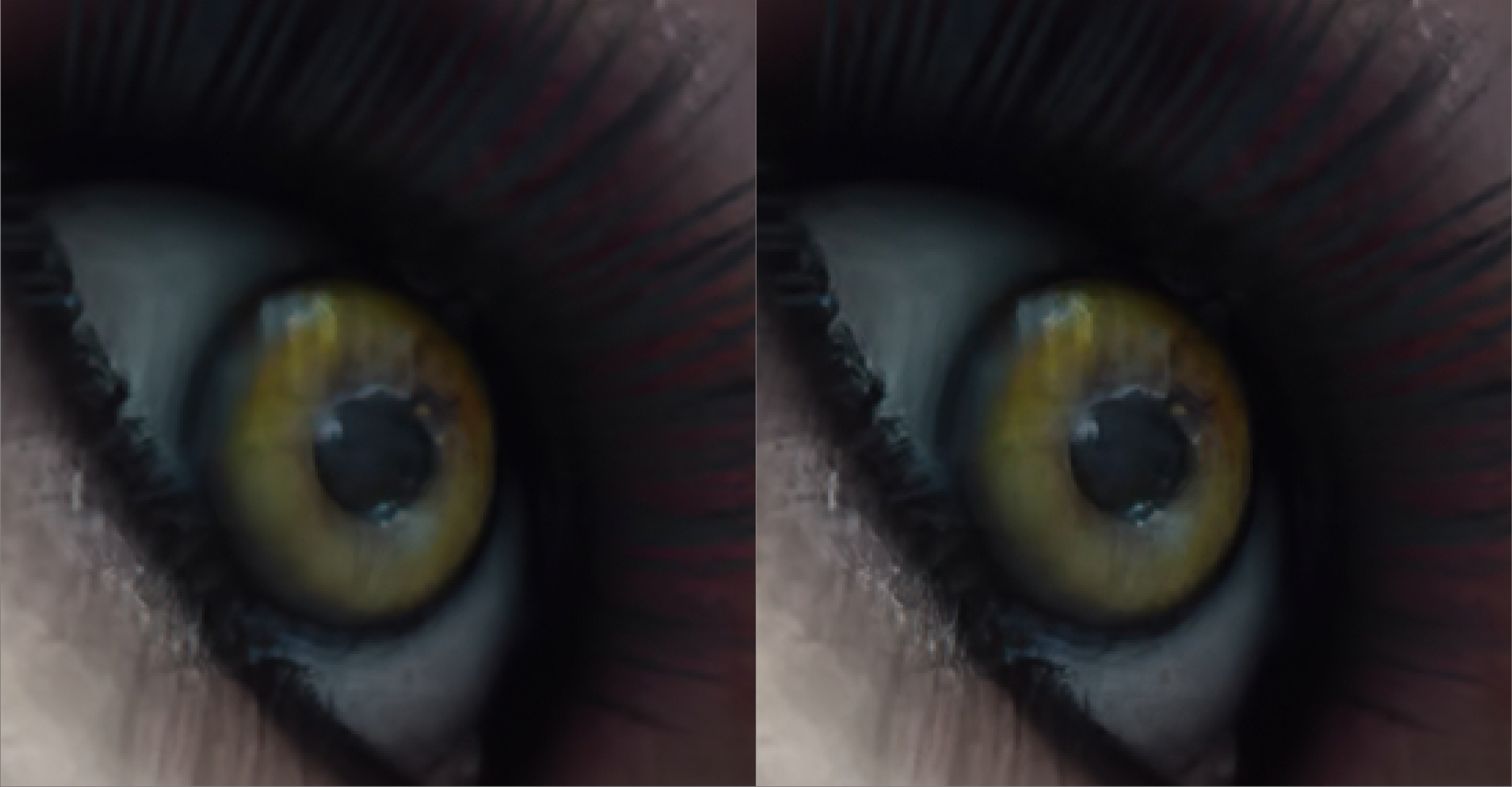
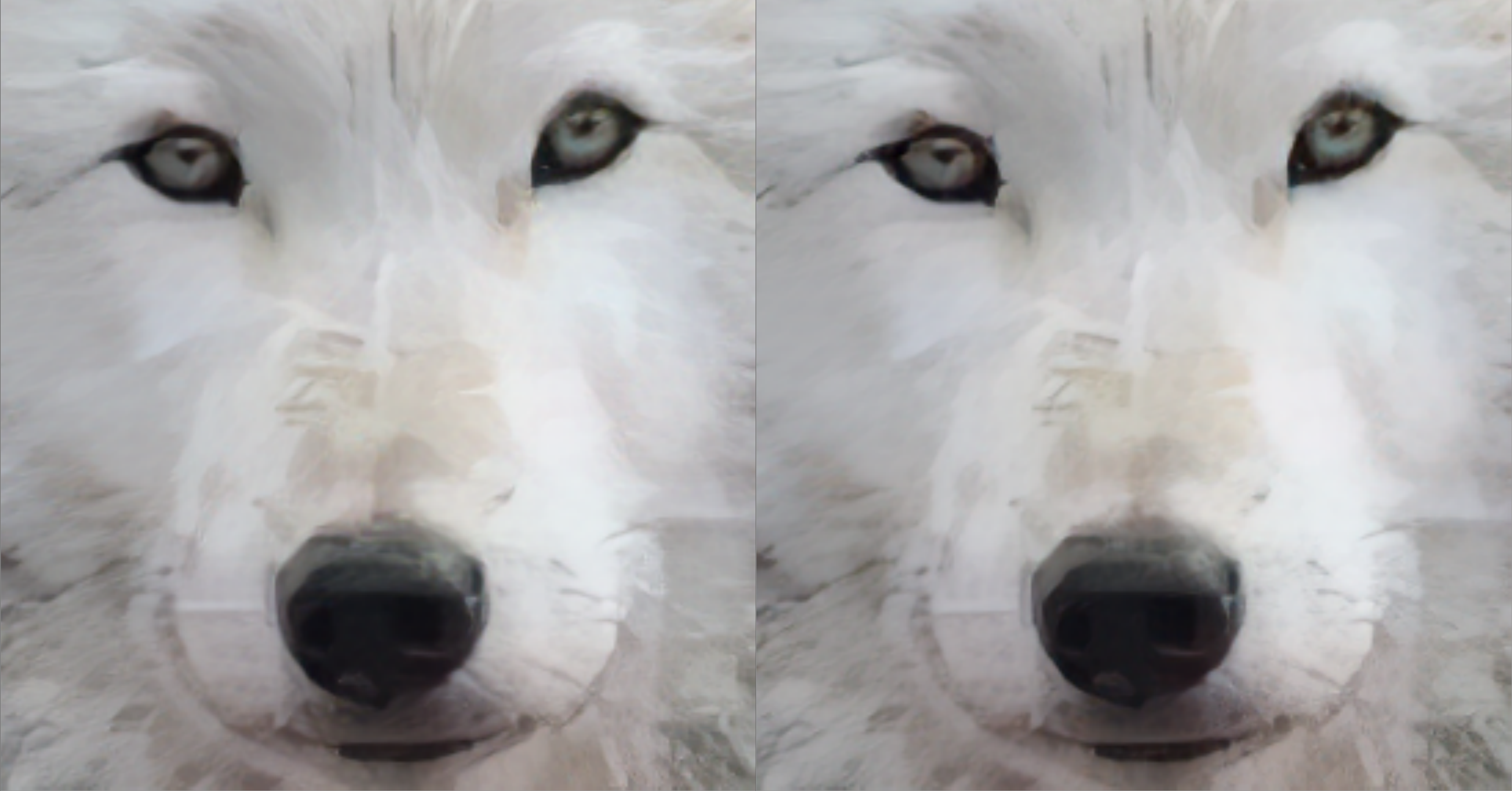
Hmm, I’m surprised. The person that said it is quite knowledgeable about such things and highly regarded.
In your samples, you are sure everything else was equal? The one on the right looks crisper, but I’m not sure if that’s because it is oversharpened.
Of course, but mind you that was one of the few occasions were the difference was that drastic - For the most part there was virtually no difference between the two, expect that maybe fp32 was better at rounding errors, but at the end there’s nothing to boast about really.
I just thought to myself that even if fp32 usually produces identical results to fp16 it can sometimes just “pop-off” out of the blue, and with no speed penalty (using an amper gpu) to justify staying with fp16 , forcing veai to use the fp32 models as default seems like a no-brainer to me.
What about those pesky compression artifacts, with large patches of boxes that ruin the image? What filter will you use in that case? I will upload an example soon.
I’ve made a test with GAIA-HQ forcing fp32 on a RTX 3090, not only it is 2 times slower but also there is absolutely no eye visible difference even at 400% zoom vs fp16. Just a very very tiny difference only visible on a vectorscope.
Maybe was just the test video I pick but why would it be 2 times slower when for you there is no speed difference ? Or was it for Artemis ?
Hi guys. Check this method out. I just discover it. No artifacts and detail smoothout with all models.
Can you post screenshots because I had trouble replicating your claims. The only way I could get “ERR” to show up on the lower left was if I set the default to SD, HD, or 4K. After importing a video go to “sizing” and choose “Custom setting”. Now “ERR” will appear behind whichever model you choose…but it doesn’t look any better. In fact it looks exactly the same. If you try changing the Scale % to 200 or whatever the “ERR” disappears and the program behaves normally.
