Hello everyone!
We have another Topaz Gigapixel release only a week after our previous release! We have another new model as well as a huge speed improvement for some NeuroServer-based models.
- Recover Faces 3 — Portrait Quality Face Recovery
- Wonder 3 & Recover Faces 3 Speed Improvements with NeuroServer — Over 300% Faster
v1.3.0
Released May 13th, 2026
Windows: Download
Snapdragon: Download
Apple Silicon Mac: Download
Intel Mac: Download
Recover Faces 3 — Portrait Quality Face Recovery
Recover Faces 2 had two problems that limited how useful it was for many images.
The first was a hard size limit. Recover Faces 2 has a maximum output size of 512x512 pixels. Faces larger than that are forced to the smaller size, losing detail and sharpness. Faces that needed recovery would look smooth and out of place when compared to the rest of the image. Our recommendation was to avoid using it entirely in these situations.
The second was dot artifacts that appeared at high strength levels, exactly when you’d need strong recovery the most. On blurry or low quality faces, a strong face recovery is needed, but artifacts would make the result unusable.
Recover Faces 3 fixes both these issues to expand when the enhancement can be used.
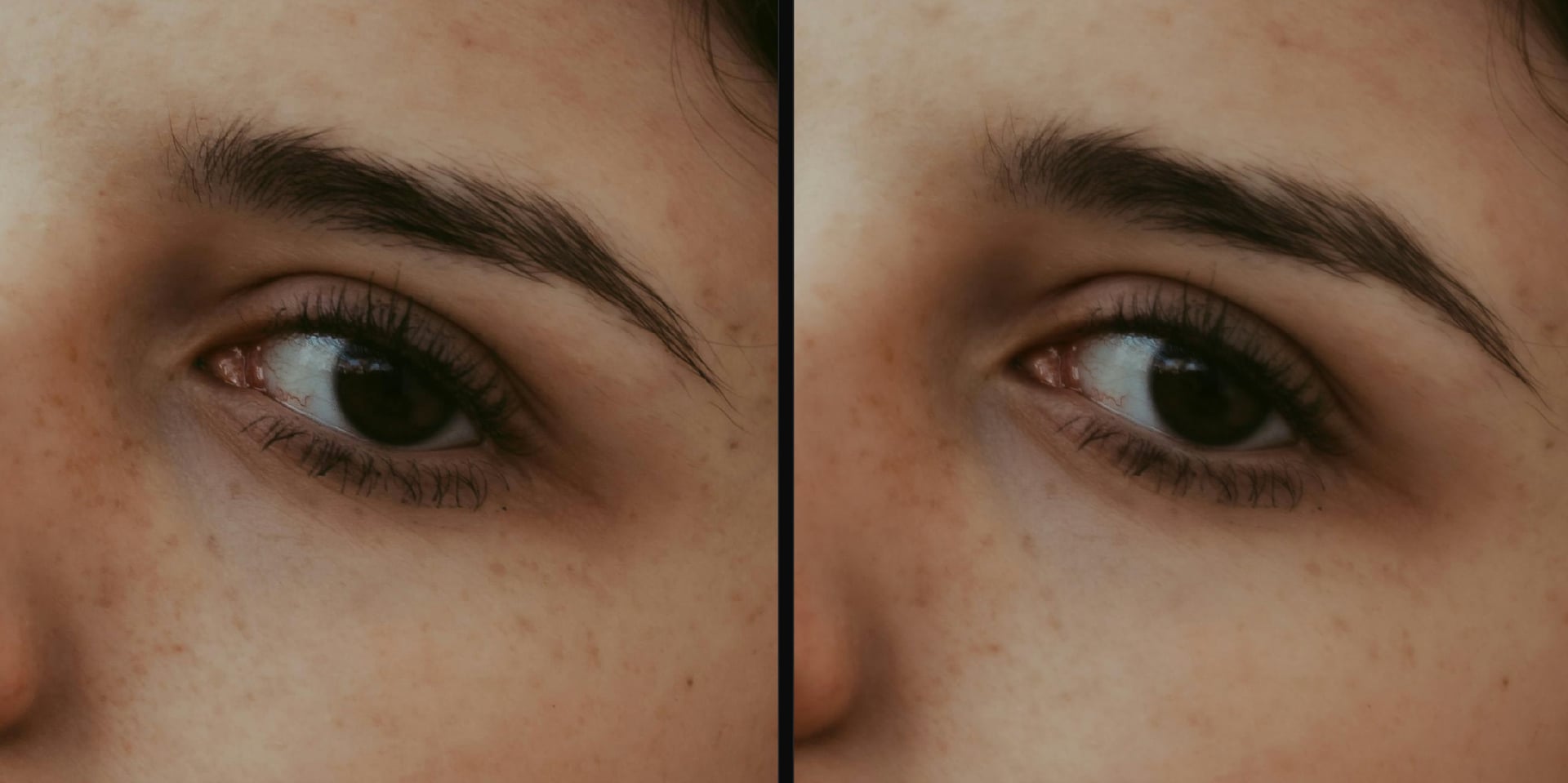
The size limit is gone. Recover Faces 3 sharpens and recovers soft detail on faces of any size, producing sharp, portrait-quality output regardless of how large the face is in the frame. This image has a large face with soft details. There is room for improvement, but the existing Recover Faces 2 model would not create an acceptable output.

Using Recover Faces 2, the freckles are reduced significantly. The eyes are softened instead of improved. Eyebrow hairs are blended together as well.
Meanwhile, Recover Faces 3 is able to sharpen the eyes, improve the skin, and enhance the eyebrows too. It’s far better suited for high quality outputs.
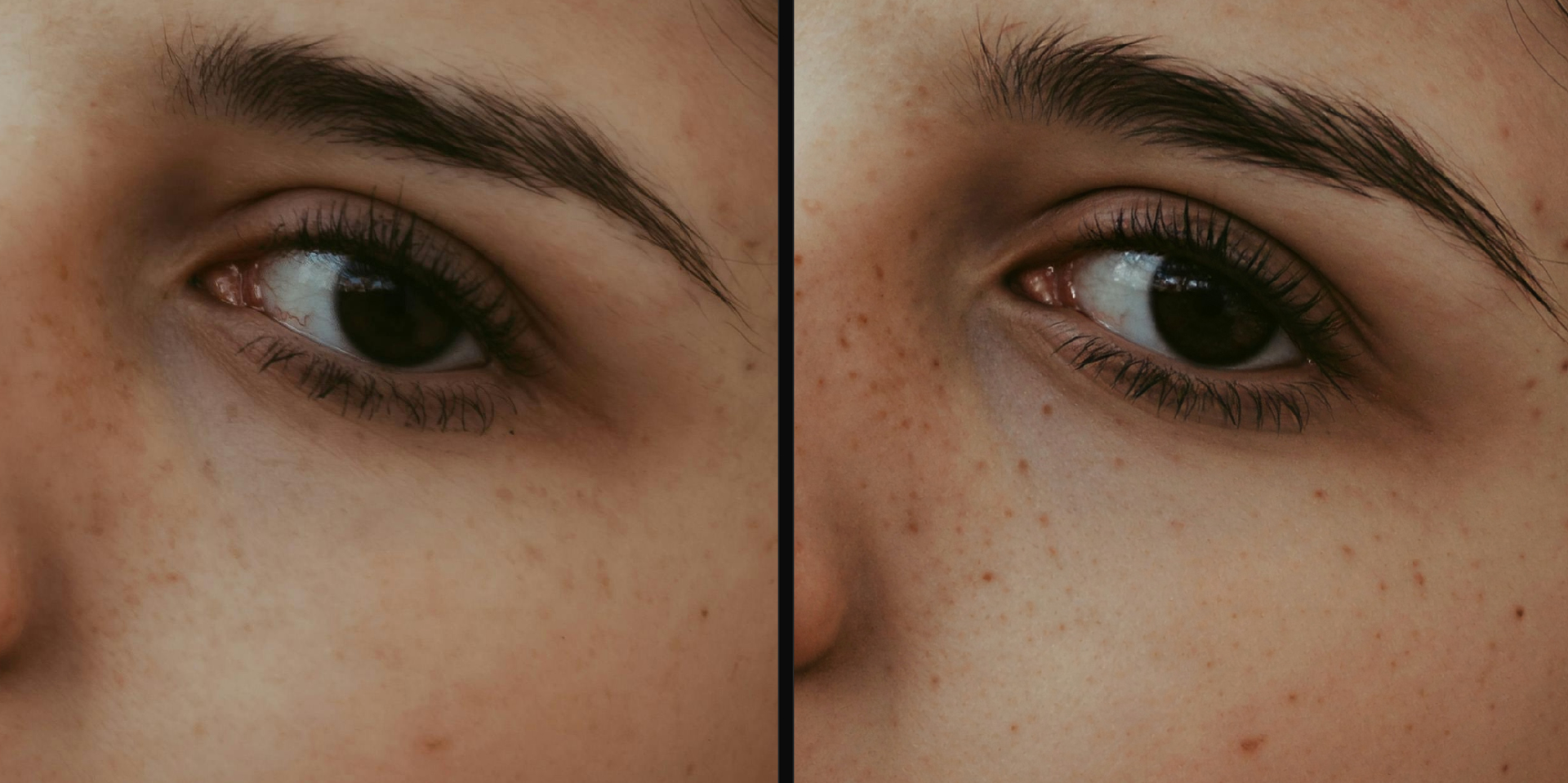
The dot artifact issue is resolved. You can push strength as high as the image calls for without worrying about it. For low quality or heavily degraded faces, that means the model recovers those faces with high quality output.
The new model is a generative recover faces model that processes each face separately. Each additional face selected will increase processing time. For example, 4 similarly sized faces will take 4x the time compared to 1 face of the same size.
For faces already with decent quality and below the 512x512 pixel limit, Recover Faces 2 will still do the job and process faster. For large faces, blurry faces, or anything degraded enough that Recover Faces 2 struggled, 3 is the better starting point. and the quality difference is worth the extra processing time.
Recover Faces 3 runs on NeuroServer and processes locally on NVIDIA, AMD, and Apple Silicon (macOS 14 or later).
Cloud render is currently unavailable for Recover Faces 3, so it will require local processing to run.
Due to the lower quality of the older model, we are sunsetting Recover Faces 1.
Wonder 3 & Recover Faces 3 Speed Improvements with NeuroServer — Over 300% Faster
NeuroServer-based models are now significantly faster. We reduced the model load time and increased processing speed for Wonder 3 and Recover Faces 3.
Testing with a NVIDIA 3080 at 20MP output, we saw a speed increase of 330%. For larger images and faster GPUs, the speed increase is possibly even larger. If you’ve been putting off images and batches because of processing time, this update will enable you to use these models more.
Hopefully this encourages more usage for these models with images that need the extra push.
Known Issues
- Recover faces 3 intermittent out of GPU memory error with 8GB VRAM. Will have a fix in next patch.
Changelog
- Add Face Recovery v3 through Neuroserver for NVIDIA, AMD, and Apple Silicon devices
- Update NeuroServer to speed up Wonder 3 and Face Recovery v3
- Fix crash with face parse model in image analysis
- Fix Recover v3 grey output on Windows devices with foreign locales
Lingyu Kong
Technical Product Manager
Image AI