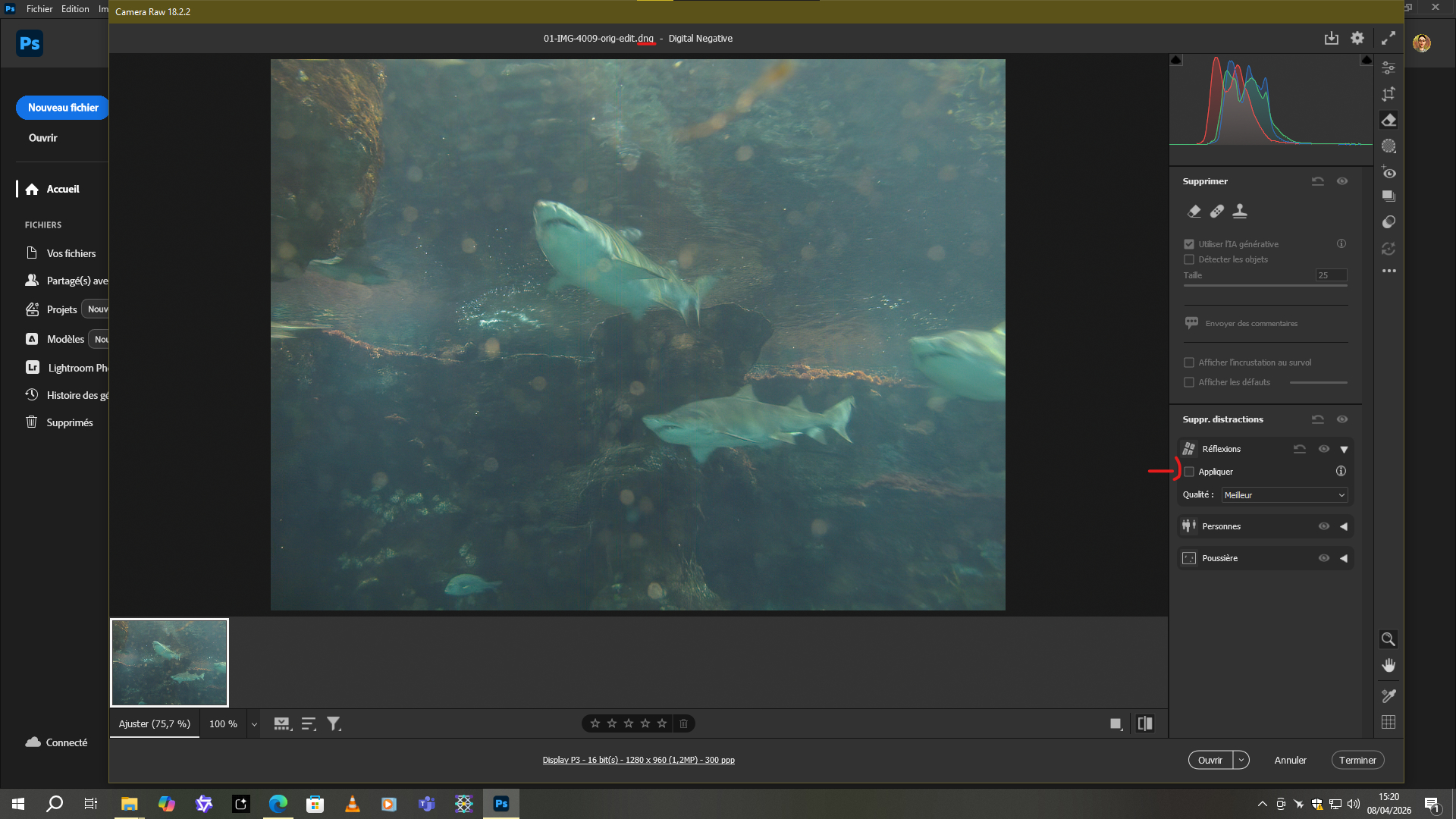
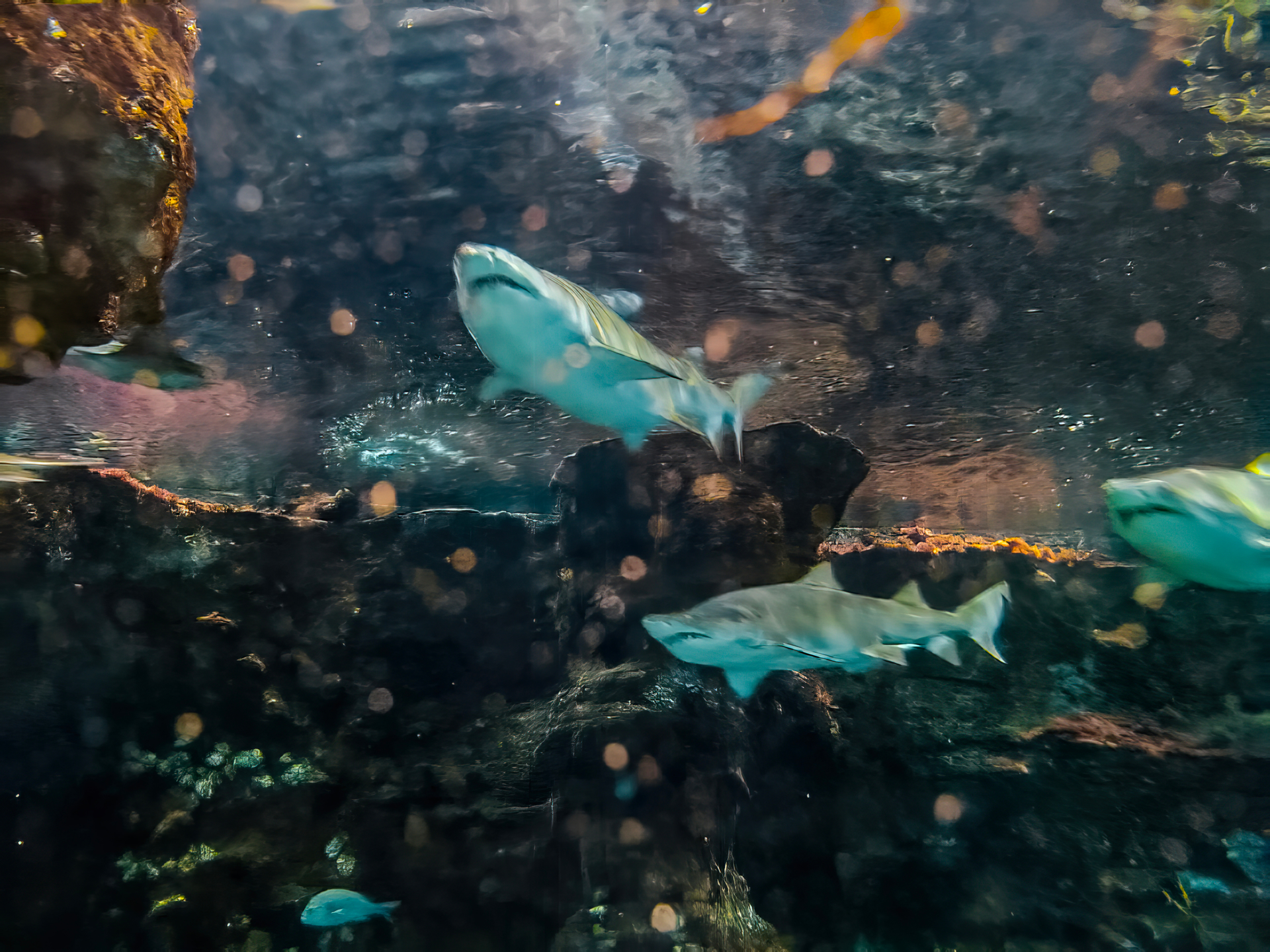
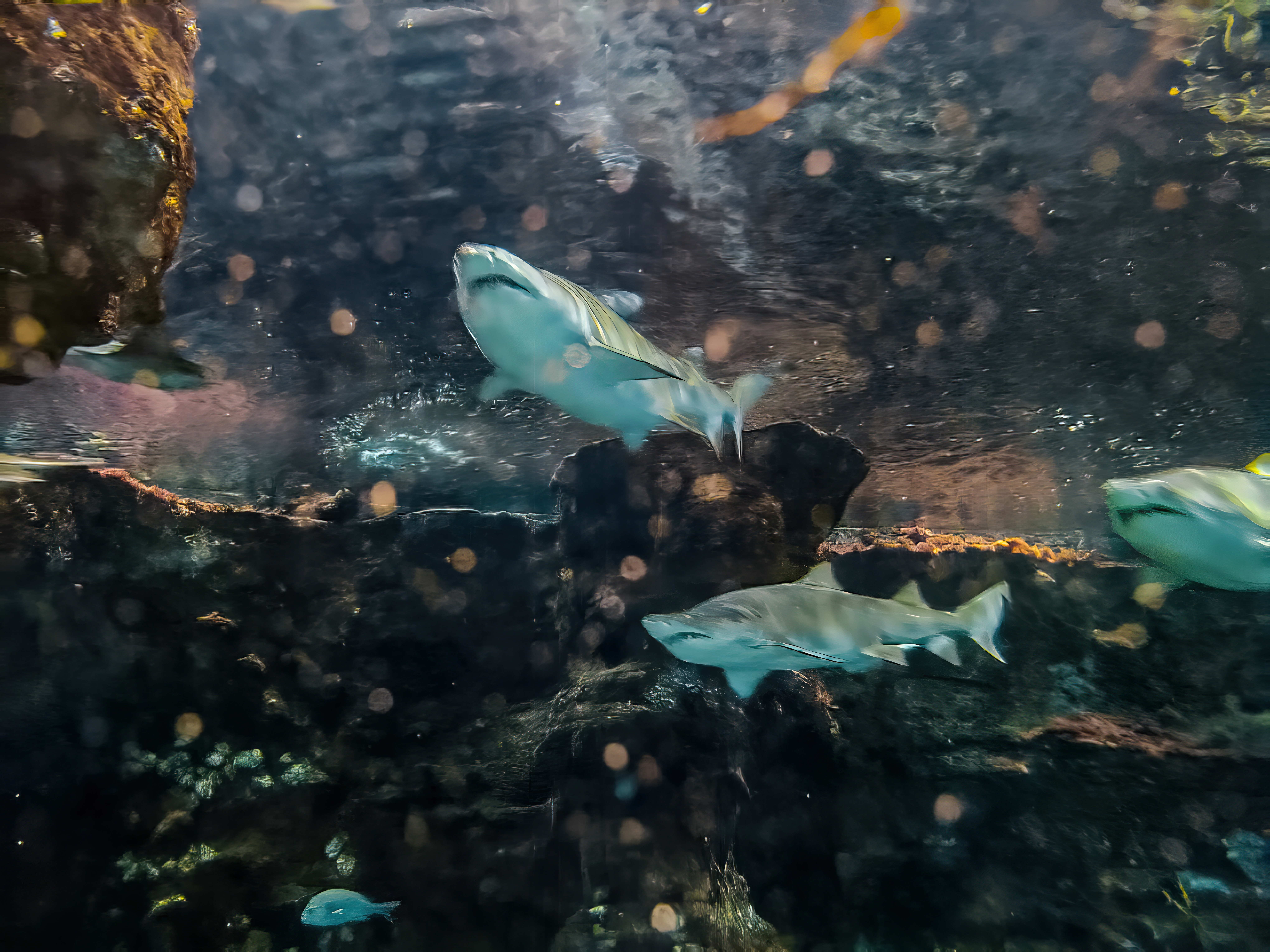
Also, by removing JPEG artifacts with Topaz JPEG to RAW and saving as DNG, I can even remove the reflection haze from the glass afterward with the reflection removal tool.
Once upon a time, while walking through a picturesque village, I saw a beautiful white goat, always quickly standing up to reach a twig, taking a bite out of it, and quickly diving back behind the fence. Out of about ten pictures taken with my Fuji-Film compact camera, one was successful (the others were without the goat). I liked the picture and so I waited for the day when it would be possible to improve it.
That day finally came today, so I used Nano Banana 2 (with a prompt) to improve what I could on the main character (fur, eye, and some details). Then I finished the work in Gigapixel using Wonder 2. I think the result is quite good. A little self-criticism must be in order: Nano Banana cut off a piece of a twig that the goat had just caught. I didn’t manage it anymore; anyway, the main star is the goat itself.
I know, just a goat, nothing exotic… so maybe next time.
No, that’s normal. I added a link shortener API. But if you click on the “Preview” window, you can skip the 10 seconds. I’ll have to add to my Readmi on GitHub that I’ve placed a link shortener API .
Well, overall, just looking at the final photo, it’s acceptable. The details are clean. The photo no longer looks slightly overexposed like the original. So it’s good. Of course, there are a few minor flaws, but they’re only visible when you put the two photos side by side. Nothing glaring, though .
Some cat… but very pretty, isn’t it? She lives in Ireland, I think in Dublin (the photo is from 2017, Panasonic compact). So that’s the promised exoticism.
The problem was that the camera automatically focused on the spruce branches and not on the cat. I tried to sharpen it using Photo and Gigapixel and in the end it somehow managed to be acceptable (compared to the original). I cut off the edges of the photo in Photo, but forgot to make it exactly the same with the original. So I additionally cropped the original for comparison (it didn’t come out completely accurate, but it’s probably enough for comparison; the essence is sharpening).
Apart from the poor positioning of the eye, the rest is well cleaned with the details of the hairs clearly visible and a better contrast than the original .
Yes, the eye is placed badly. But I couldn’t do anything about it. That’s what Nano Banana does. Maybe a lot of experiments and “tuning” the prompt would help, but it’s not worth the credits I spent. And if the original were to be hidden, no one would know anything!
you can shoot in 4K with Nano Banana. It costs 18 credits with the Nano Banana Pro and 12 credits with the Nano Banana 2. You get 30 credits per day using a Google account. Personally, I have two Google accounts, so I can shoot four images per day.
In the photo repository I found another interesting picture – Saltwater crocodiles from the National Park near Chennai City (population 5 million), India. These crocs are endangered, so they are being taken care of. I took the photo in 2012. Edited with Photo and Gigapixel (sharpening, noise reduction, enlarging) with a little exposure and color adjustment (in another program). Here is a fairly large group of them dozing. Cute (from a distance ).
I used Nano Banana + Hypir and finally Gigapixel for the final scaling with Standard max (for the background) and Realistic Redefine (for the serval’s fur).



 .
. .
.

 . It’s true that compared to the original, there’s a nice improvement.
 ).
).