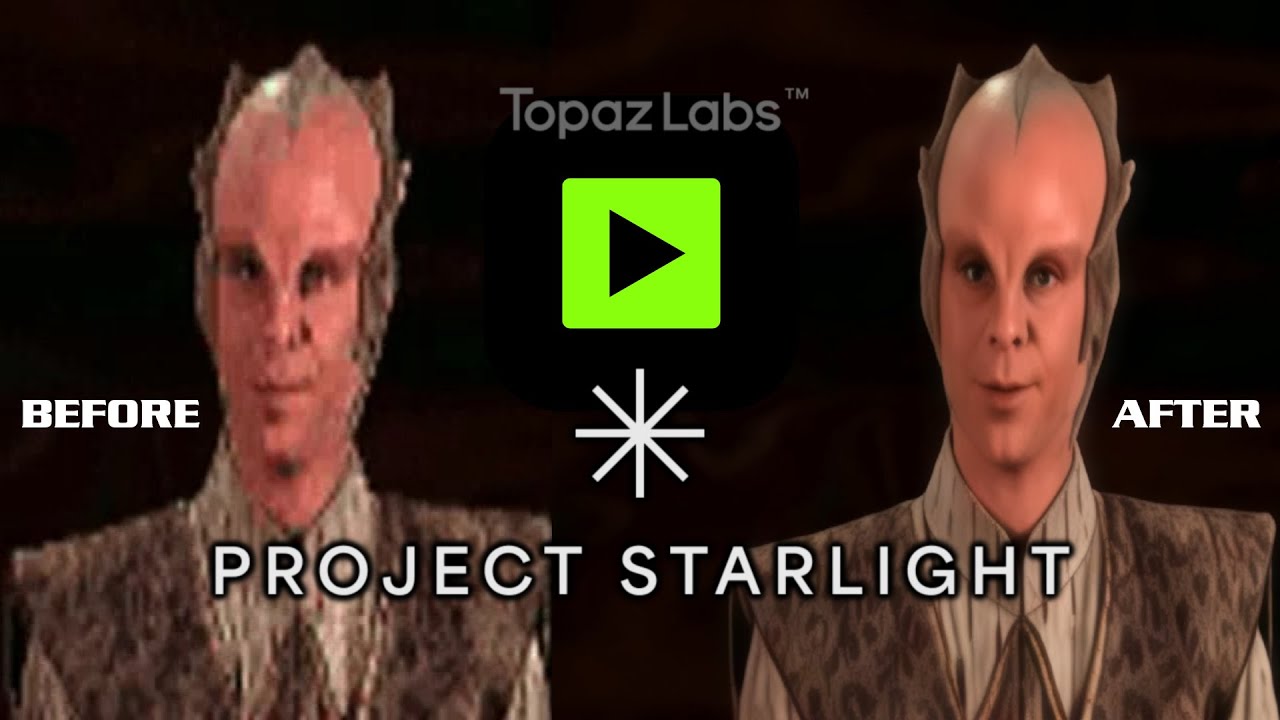
The early access for Astra does not state how many credits per minute it costs. That is vital information that is missing. You can’t even buy more credits until you subscribe. I’m not doing that until I understand the cost.
More importantly, Starlight is a new model that is very expensive (~$500 for a 90 minute movie upscale to 1080p using “Best”), so adding a new online model like this with unknown cost is very confusing.
I can understand Astra’s “Creative” mode that will change the video to some degree, but “Precise” mode sounds like it is trying to do what Starlight “Best” does. Does Astra do it better? Is Astra “Precise” what users should be using if they want to achieve the best HD upscale of a source video or movie, or should it be Starlight “Best”? Is Astra “Precise” a replacement for Starlight “Best”? Is Starlight succeeded by Astra? If not, could you please provide some examples of Starlight “Best” and Astra “Precise” on the same source video? If the use cases differ, could you please explain the use cases for Starlight “Best” and Astra “Precise”?
I’m not sure why this wasn’t explained or made clear before a brand new model was dumped on everyone, because I’m very confused.
In Astra early access, I show the same amount of credits that I show on Starlight.
Starlight costs $499.99 for 9000 credits per month.
Astra costs $299.00 for 5400 credits per month on the “Pro” plan.
So then these credits seem to be interchangeable. Will this change when Astra is officially released? Would I have to pay for Astra and Starlight separately? Or can they be combined? These are very expensive; which plan should the user be paying for if they want to use both?
Do the credits stack from month to month, or do they reset? In other words, if after two months on Starlight on the 9000 credits per month plan, if I haven’t used any credits, do I now have 18000 credits, or do I have 9000? And whatever the answer is, does it work the same for Astra, of different?
So many questions, so much confusion.
Please Topaz, make these things clear for the user.
I am confused on all of this too. I am glad its not just me. I own Topaz Video AI - latest version, and I don’t know what I hav access to. I see two new models in my Topaz - one called Mini? Do people like me that own Topaz Video AI have access to any Creative Upscaling Tools for video?
Starlight Mini runs entirely on your local machine. You don’t need any credits for it. However, it’s extremely slow. It would work best with two 4090 or 5090 graphics cards, which would need a large power supply and a 20 amp outlet.
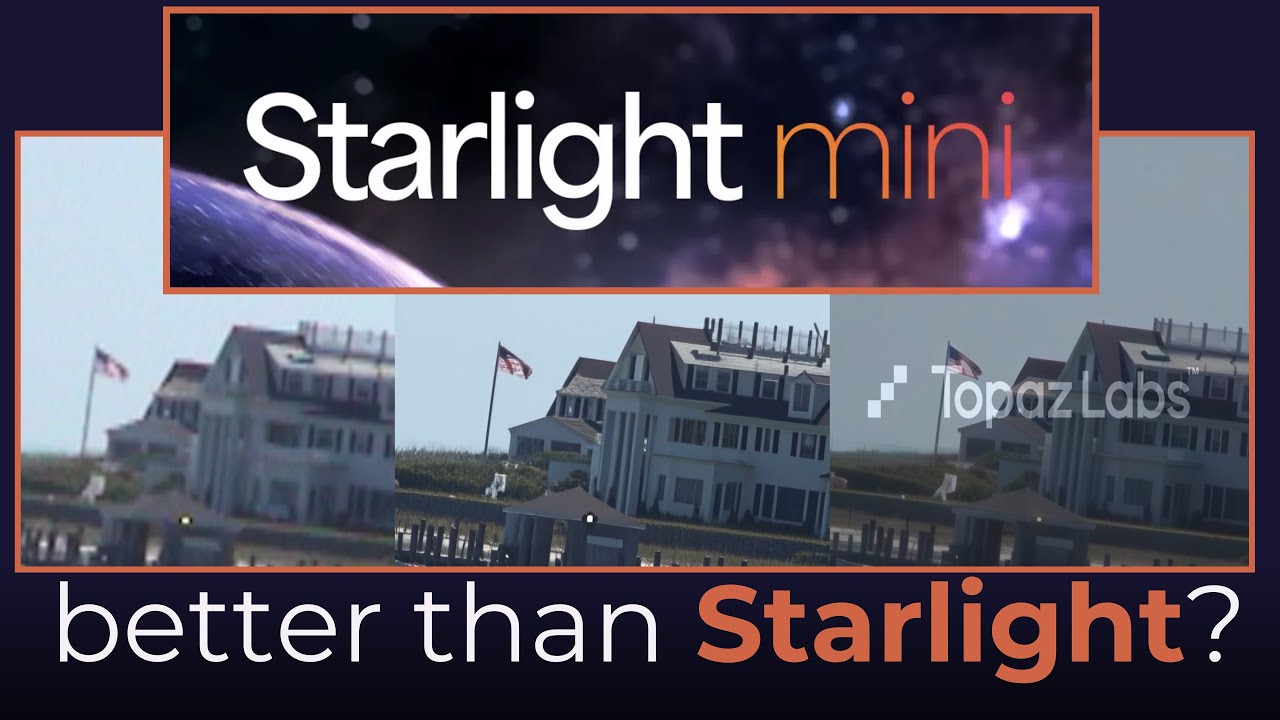
The above video seems to show that Starlight Mini Local is actually better than Starlight Cloud, although they don’t say if they are using “Best” or “Fast” for Starlight Cloud. It’s possible that “Fast” Starlight Cloud is the same as “Starlight Mini” Local, but as par for the course, Topaz does not make that clear.
For cloud rendering, you have to buy credits. You can check to see if you have any here, for Starlight Cloud:
OK thank you! I tried Mini and yes, it takes a while. Do you know what it means when that pop up little window comes up and ask you something like: Starlight Mini is its own app and you need to download blah blah - click here. What does that mean?
Hi there! I was just wondering if there are any plans to release a local version of Astra (Creative) in the future, like Starlight Mini. Not asking for a timeline, just curious if it’s on the roadmap at all.
Replying to my own post… I had to find this on a YouTube video that didn’t have a lot of views.
On the cloud, Starlight Fast and Starlight Best are completely different than Starlight Mini. Starlight Mini is strictly a local model, and tends to produce softer results that look closer to the other local GAN models that TVAI uses, even though it’s technically a diffusion model. Starlight Fast and Starlight Best are strictly cloud models that use diffusion. Starlight Fast probably actually works best most of the time and produces results that are pretty close to indistinguishable from Starlight Best.Edit 9/15/25 - In my testing I have found that this is not true.
The author of the above video prefers Starlight Mini; I think it’s too soft.
It is also important to note (as discussed and shown in the above video) that Starlight Fast and Best got an update in June 2025 that greatly improved their output, so if you tried Starlight cloud before then and didn’t care for the results, you might want to try it again.
ALSO answering my own question, after finally doing some testing, Astra Precise is giving the exact same results for the exact same video files as Starlight, both for “Speed” and “Quality”. The frames are 100% identical, and the files sizes are 100% identical as well. It appears, at least to me, that Starlight was the “beta” (if that’s the correct word) launch, while Astra Precise is the “official” launch. Starlight’s credit costs were also reduced to be the same as Astra Precise. Finally, all of Starlight’s file names (both for speed and quality) have the word “Precise” in them.
This is not new info. It’s definitely true that the Starlight models are now in the Astra web app. I remember a dev stating that they’re going to deprecate the Starlight page at some point because it’s now redundant.
Yes Starlight mini tends very soft, but it’s often needed and ideal for old stuff, specially when you have blocking/compression artefacts, the smoothness of SLm break the bricks down, and as higher you upscale as more. Afterwards you can use some sharpener when it’s to weak. So I love Slm here it’s the best and dual Slm upscale ( 2x and 2x) brings stunning detail level
Using SLm for HQ HD Stuff is a problem, here it’s a way to soft, but I’m sure this can be solved, but only casual sharper running over the HD footage Slm uscale result brings not the best results, you need a form of “Deblur” here like some TVAI models can do.
I don’t have a perfect solution for Slm HD footage upscale, but what works is if you do 1x Iris MQ (automode) and only use the Deblur function from Iris MQ running over SLm upscale result. This solves the too soft problem and gives great results, but has a disadvantage that Iris like other models tends to trace contours, which can make them too harsh. So it does to much here not only deblur. For best natural look, contours should be a little “frayed” which is what the old “Gaia” model does.
Hi
I just realized that Starlight Fast on the web page is not Starlight Mini.
My problem:
I have TVAI 7.1.4 and would like to use the cloud as well, so I uploaded a few 160p cgi clips with the desktop app.
Unfortunately, the desktop app heavily compresses the RGB video before uploading and converts it to 4:2:0, which is not ideal for CGI graphics… The download is also heavily compressed with h264 with CRF23.
I have now tried to upload my video directly via the web page as h264-RGB-lossless as a test and my video is not compressed here and the colors are way better, and surprisingly, the download is only compressed with CRF15!
Great, but unfortunately the Starlight fast is not quite as nice and has slight ghosting than Starlight-Mini
What would you recommend if I want to have Starlight Mini in the cloud in good quality?
Can I set the format in which it is uploaded to the cloud in the desktop app? I would like to use 4:4:4 10-bit… or at least 4:2:2
Unfortunately, the download will still compressed with CRF23.
I want also use the cloud, because on the local Starlight Mini I can see sometimes some “tiling-patterns” which is not in the cloud version.
I guess because the cloud has way more vram?
I have found no way to avoid the tiling on my local Starlight mini and have a RTX3090 with 24GB vram..
that is very interesting! I have already criticized why they do CFR23,this is really not appropriate! Please Topaz change the CFR15 for all cloud exports would be fine and take care to at least 4:2:2