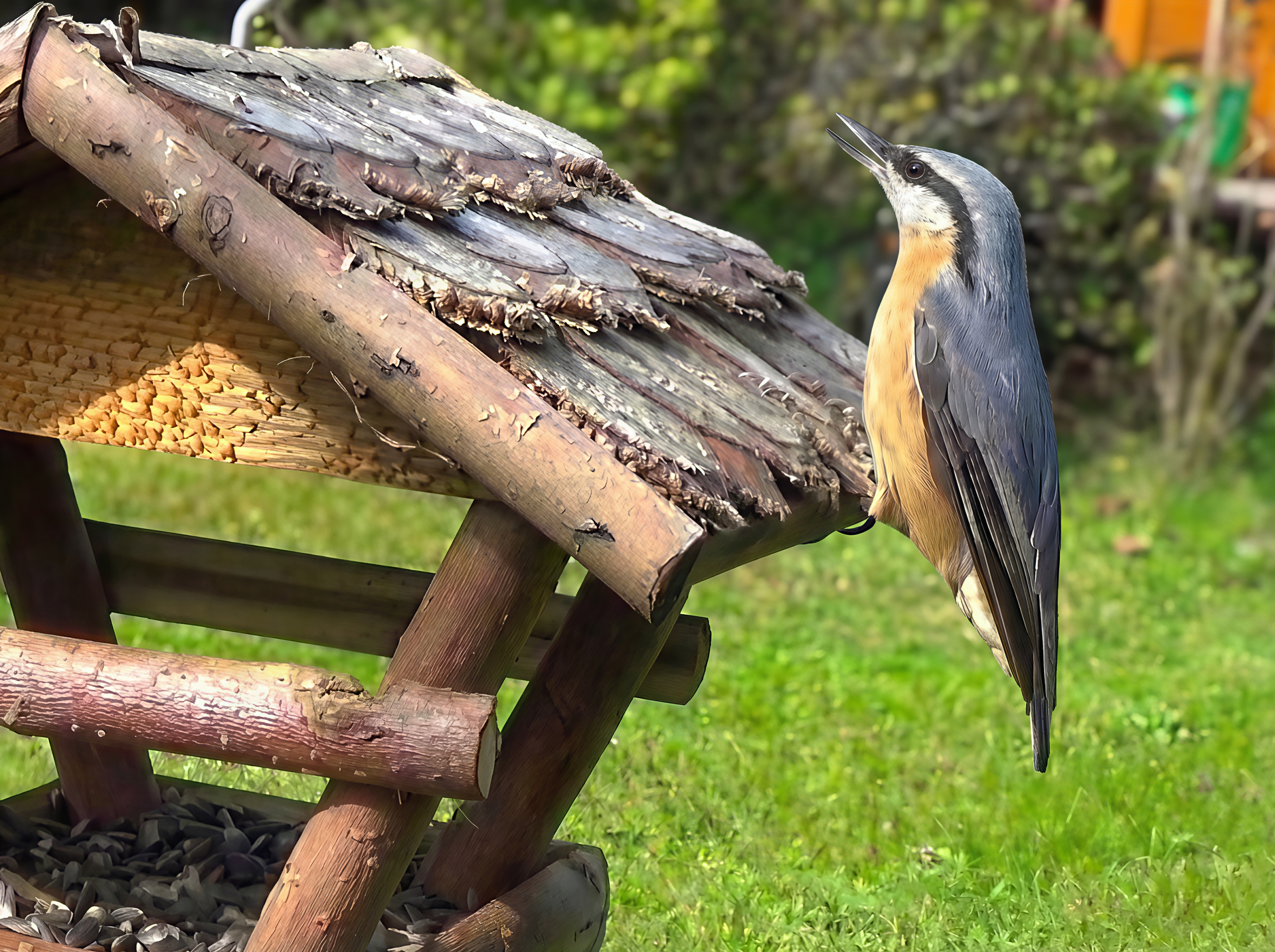
The prompt used is as follows:
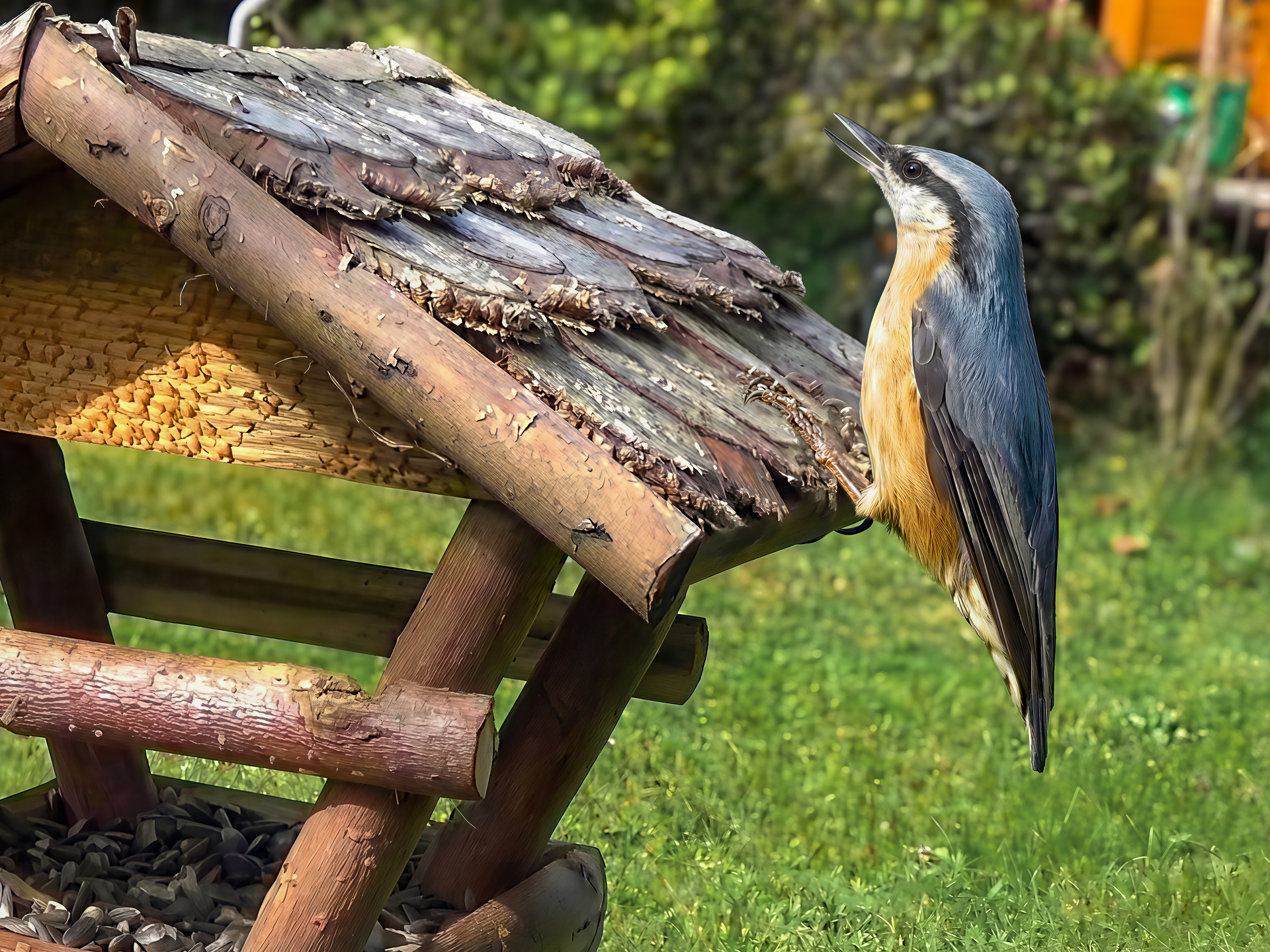
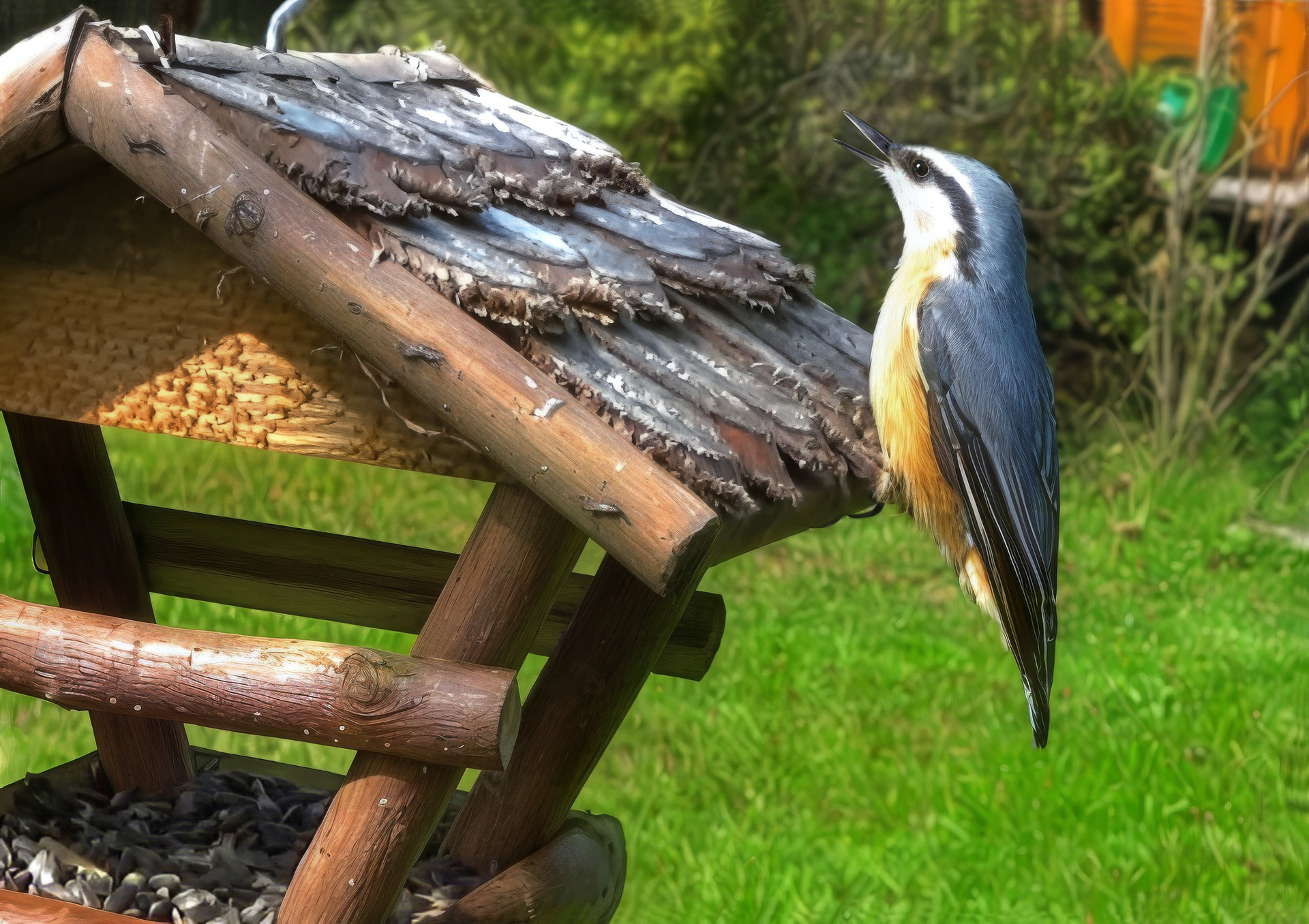
”Ultra-realistic macro wildlife photograph of a Eurasian Nuthatch (Sitta europaea) perched vertically on the edge of a rustic wooden bird feeder roof. The bird’s profile is sharp, with a pointed beak slightly open towards the sky, slate-grey-blue plumage on its back, a vibrant russet-orange belly, a white throat, and a distinctive black eye stripe. The feather texture is silky and highly detailed.
The feeder is handcrafted, made of rough-hewn logs with a roof covered in textured natural bark shingles, microscopic moss and lichen, and sunflower seeds visible inside. The lighting is bright and natural sunlight, with soft shadows.
Background: a lush garden with a pronounced bokeh effect to isolate the subject. 8K quality, high definition, hyper-realistic wood texture, saturated and natural colors, National Geographic style.”
Right now, I am making the final steps of improvement by increasing the resolution to a size of 50 megapixels.
But considering the very degraded original image, I am happy with the result I have so far.
And here’s the final version. Improved with a touch of Realistic Redefine, plus a coat of Recover V2. V3 looked truly awful. And a coat of ON1 Resize 2026. Oh, and I also attempted to reconstruct the bird’s legs with Gemini Nano Banana. I couldn’t get any better than this given the poor quality of the source. I also made a small color correction.
Beautiful! It certainly took a lot of time, but the final image turned out well, I like it. A nuthatch with all the details, and a nicely adapted background. Nuthatches are great birds, I look forward to spring when I meet them again. My original photo is really lousy, but it’s amazing what can be done with it (the feeder is now nice too). Thanks!
The details of the seeds are destroyed. They don’t even look like seeds anymore. The bird’s beak has been altered. It’s no longer the original one. And some feathers are missing.
Indeed. And it’s often necessary to play with the limits of AI by using other AIs to counter the limitations of previous models and a little manual tweaking.
Nuthatch: My mistake was in using the generative method (hence the artifacts with the flocks of micro-nuthatches). I mainly wanted to add and improve the feathers, but even Nano Banana couldn’t do that very well. Harold’s (time- and patience-consuming) method of editing different parts of the image and merging them into the result gave an excellent output (an instructive procedure for me).
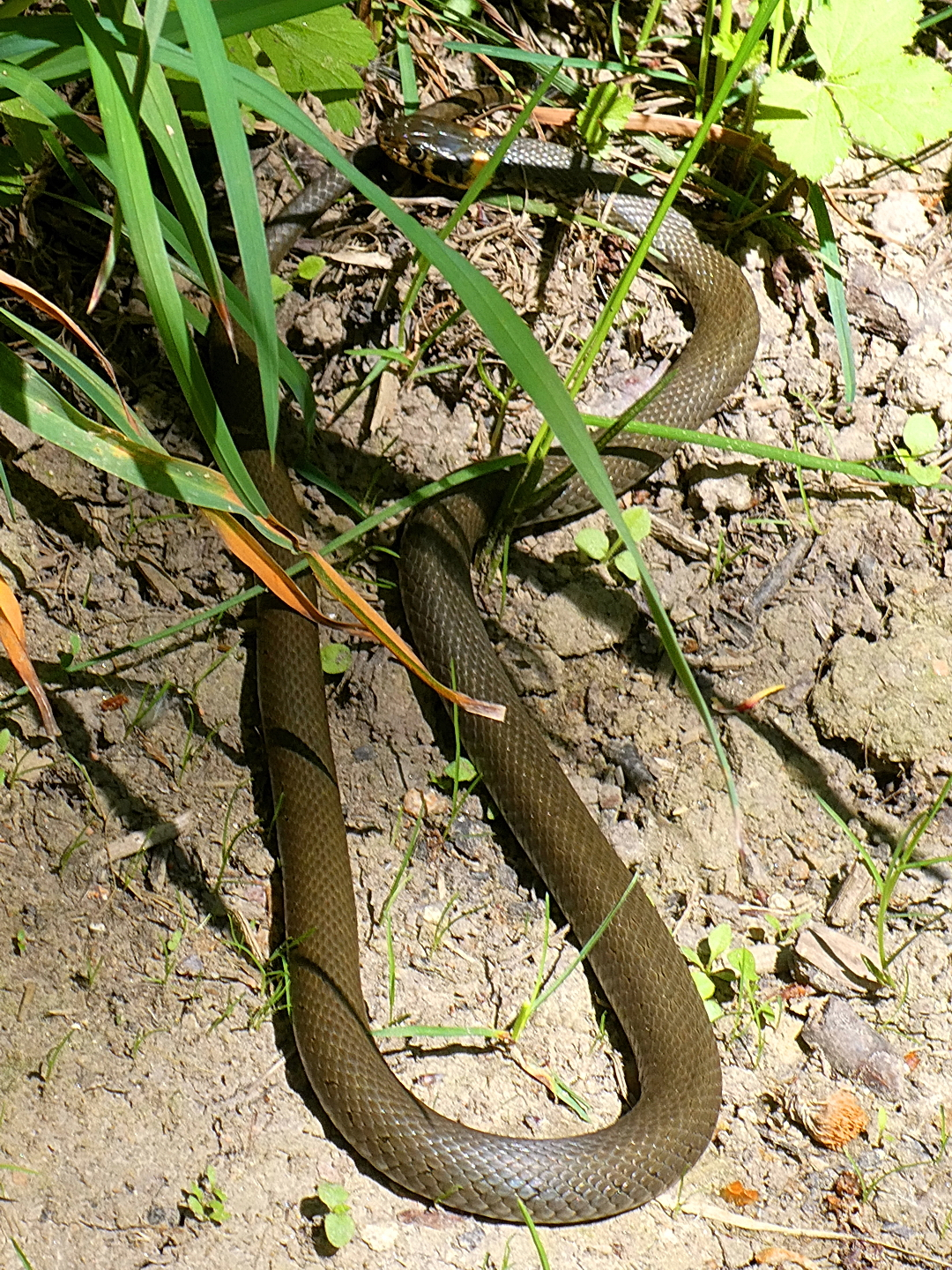
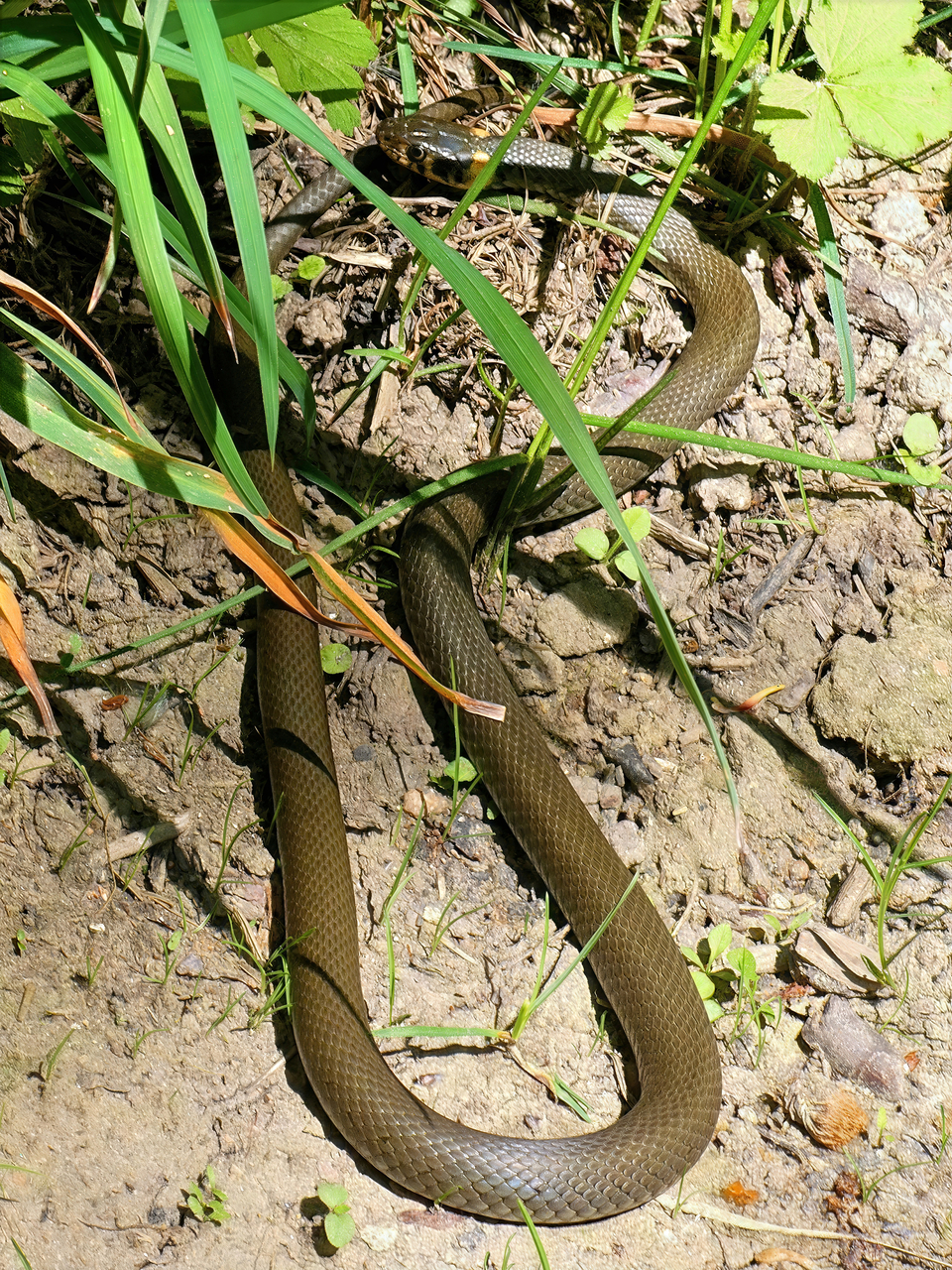
I found another photo; the original (crop) was not technically so bad, but it needed improvement. It is an interesting (non-venomous) snake living by a pond and it can swim beautifully. This time I didn’t miss it because it was cold and the snake is a true reptile, thermophilic, so it didn’t run away. I think its name is Grass Snake(?). I tried to improve it (enlarge the crop and improve the scales on the body, possibly the head too). The best result was obtained using Gigapixel-redefine-realistic-4x and then Topaz-denoise-lighting. Maybe it’s not that bad, no other additional method gave me a better result (Nano Banana not used). I don’t even know what else to improve (but experts would certainly find). I’m probably going to improve the color of some parts of the body, which have lost their color due to sunlight (gleam). But that’s for another program, so later. Now just for illustration:
Hey everyone, here are some new photos taken on February 12th at Pairi Daiza. Here they are with red pandas. As usual, I used Hypir AI in ComfyUI and Gigapixel with Standard Max and Subtle Redefine. A little Sharpen Strong from Topaz Photo and also Nano Banana Pro for certain details, particularly to restore details destroyed by the blown-out areas in the last photo.
An artist (photo and other) whose talk I attended years ago also suggested desaturating background colors (like the grass in this shot) slightly (not to grey) to make a main subject or object stand out more. The way they used the technique it was a subliminal effect that really helped direct attention in their images. It didn’t scream (OMG, the background is desaturated!).
That and the suggested selective focus (with the softer DoF in the surroundings) would make the bird more of a star (even though it’s already a cool-looking bird!).
I am perpetually jealous of the wonderful places you are able to visit to get animal shots! Well, and the fact that you take/process great shots of the critters too….
Thank you, that’s really appreciated . In a few months, I’m going to visit Edenya. A brand new greenhouse that opened on February 7th in the Paris Daiza park. There are lots of plants, but also some new animals. Not all of them are there yet. But I’ve already seen some photos of other visitors, and it really makes me want to go. There are even two jaguars. But only one is on display at the moment. And it’s absolutely gorgeous.
So, for this new year, I added some extra equipment to my smartphone to improve my photos. I added a teleconverter to double the reach of my Galaxy S25 Ultra’s 5x lens. It’s the Neewer LS-79 220mm. It has a 43mm thread at the end so I can also screw on filters or adapters for standard-sized filters like the 67mm ones.
Well, sometimes I still get shaky. And I use Topaz Photo or Nano-Banana to blur the movement. But I also have a trick. I attached a strap to my smartphone case. So I also use that as a support point .
Perhaps one day I should make a tutorial on my workflow for processing a smartphone photo and making it look as good as if it were taken with an SLR camera.


 . In a few months, I’m going to visit Edenya. A brand new greenhouse that opened on February 7th in the Paris Daiza park. There are lots of plants, but also some new animals. Not all of them are there yet. But I’ve already seen some photos of other visitors, and it really makes me want to go. There are even two jaguars. But only one is on display at the moment. And it’s absolutely gorgeous.
 .
.