But it worked! Performed better than Proteus on that particular source.
Even if we have guidelines, at the end of the day there will be cases that fall outside of the guidelines
I’m trying out V 334, applying VAI to monochrome SD footage originally from a DVD made from a terrible 16mm transfer. From the DVD I scaled up to HD 1080 progressive interlaced. Whenever the subject moves quickly, the area of movement just blurs out into a foggy cloud. Like other users recently, I’ve tried Recover Details, Motion DeBlur, Sharpen, using IRIS manual controls. I am still experimenting, but I sure don’t like the blurry foggies during movement.
Recommendations which keep subjects in motion fairly sharp are welcome. This is is critical!
Best as always,
Loren
is this the Iris v2? how to download offline and use it on the non Alpha version?
thanks for your contributions
I think, We can’t. 
Hi Loren, thank you for sharing!
Have you tried another model like Artemis Medium Quality?
Not released yet 
Great to see this thread! The reason I bought VEAI in the first place was to upscale my Stargate SG-1 DVDs. After a lot of fiddling I developed a workflow where I would run the MKV video ripped from the DVD thru Handbrake, to de-interlace and clean up motion problems. Then I’d run that file through VEAI, usually Artemis medium.
Now, using Video AI 3.4.4, I tried Iris on a Stargate SG-1 episode (“raw” MKV, not run thru Handbrake) and was very pleased with the result. I upscaled to 4K and the picture looks very sharp with nice detail. There are no obvious interlace or motion artifacts, no “dropped frame” or jerkiness. The only problem I encountered was that when I played the resultant MKV file in Plex, it was “framed,” in other words, the 16x9 picture does not fill the screen. I’m not sure why this is. In Windows, the icon for the video shows up as 16x9, and in VLC, it plays properly (no “frame”).
For this effort, I used settings:
Revert Compression – 10
Improve Detail – 25
Sharpen – 70
Reduce Noise – 25
Dehalo – 5
Anti-alias – 0
Recover Original Detail - 80
Edit - I figured out how to avoid the “frame” issue - set to 4x upscale, not 4K. That results in a “full screen” on the Plex “letterbox” setting. I might try kicking up the settings a bit, especially for compression, detail, and sharpening. Overall, though, I’m very pleased with the result. Wish Iris had been available when I did these the first time. Kudos to Topaz!
I’ve been using topaz for 4 months now and I shoot with the Dvx100b and I have fallen in love with topaz. A few things I’ve noticed with topaz and dv footage. First is noise in low light topaz does a good job of removing the noise but at a cost. Using any model I set recover detail at 100 the reason for this is objects in the background will turn into blobs people will look like meat balls. Also I’ve noticed that topaz will paint faces on people in the background . By lowering the output resolution and setting recover detail will fix this issue . Iris has an issue with lettering I have found labels boxes or signs will become jumbled up letters turned and misplaced .
Proteus seems to be the best model over all being able to handle faces and backgrounds at the same time. For dvx100 footage best setting so far is proteus - recover detail 100% interlaced auto
And Parameters auto.
I export my footage as mov 422 proxy


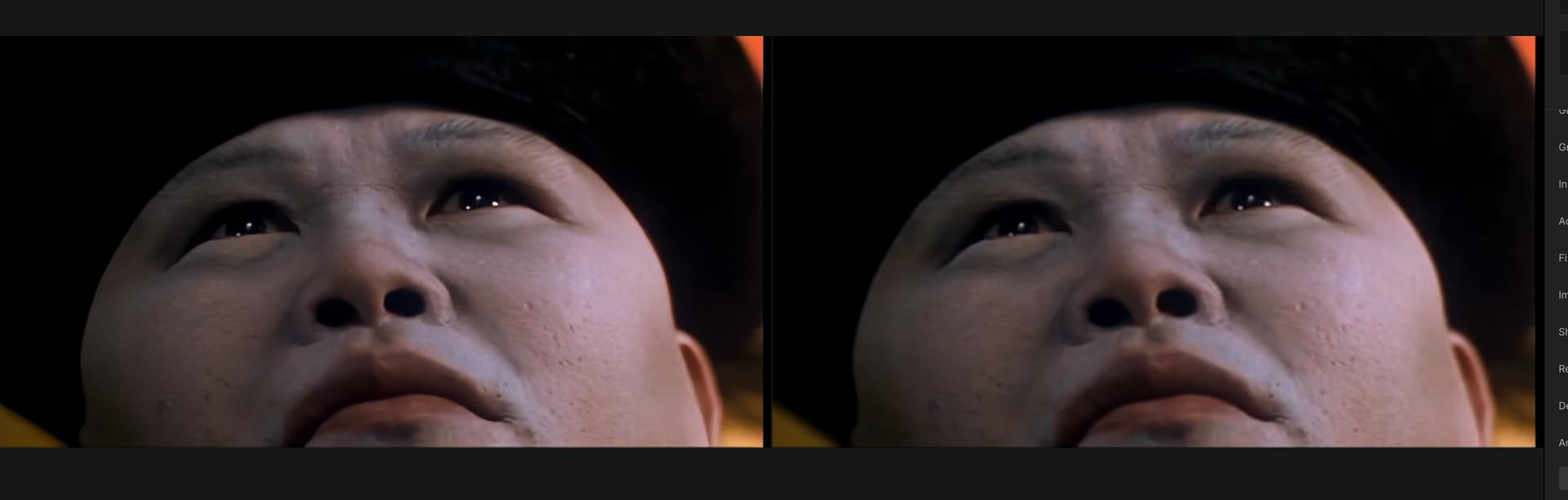
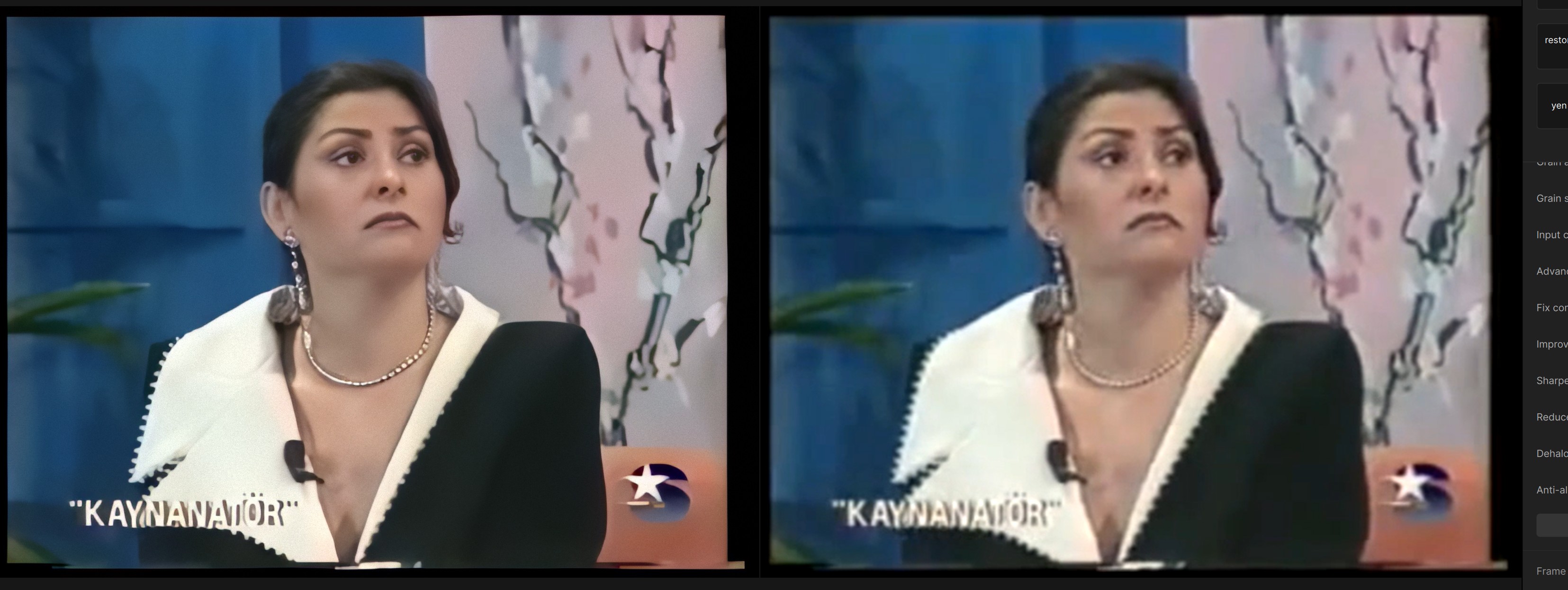
For most sources Iris is to soft, by increasing “Deblur” levler (up to 100%) you can compensate. Fix Compression and Dehalo does the opposite; smoothen/blure. Sharp is a bit special; when it gets not sharper while increase, you must additional add “Deblur”.
Deblur is lowest and all others functions more invasive, does pixelshifts, new pixel organisations, while “Dehalo” and “Improve Details” are the most invasive ones. So this hasnt’ to be bad, pends on source and what you want. Sometimes it’s needed. I believe that if you use this function, you should use high settings to achieve something, but if you set the value to 2, for example, is not good, the pixels will shift, but the desired effect of the function will be almost non-existent.
The biggest problem with Iris LQ is that it can reduce details level and draws contours too sharply (Iris MQ does not or less), which is actually the opposite of what the old model Gaia does, which frayes out a little bit to achieve a more natural look. However, Gaia does not perform reconstructions but can today be used as a finisher (doing 1x).
So the Iris and also Proteus Model should get updated. In case of Proteus V4 it does to much denoise (remove details), but is good for removing artefacts. Proteus V3 keeps more details. The old modesl does it overall but classic denoise is no longer really used today; noise is now “integrated” and selectively detected and reduced.
